International Tax and Transfer Pricing — Overview
Tiger Global Supreme Court Verdict: Transforming DTAA Expectations and Mauritius Investment Structures.
By Nagavarapu Sudheer, M.Com, F.C.S., L.L.B., Partner, A2 Consultants
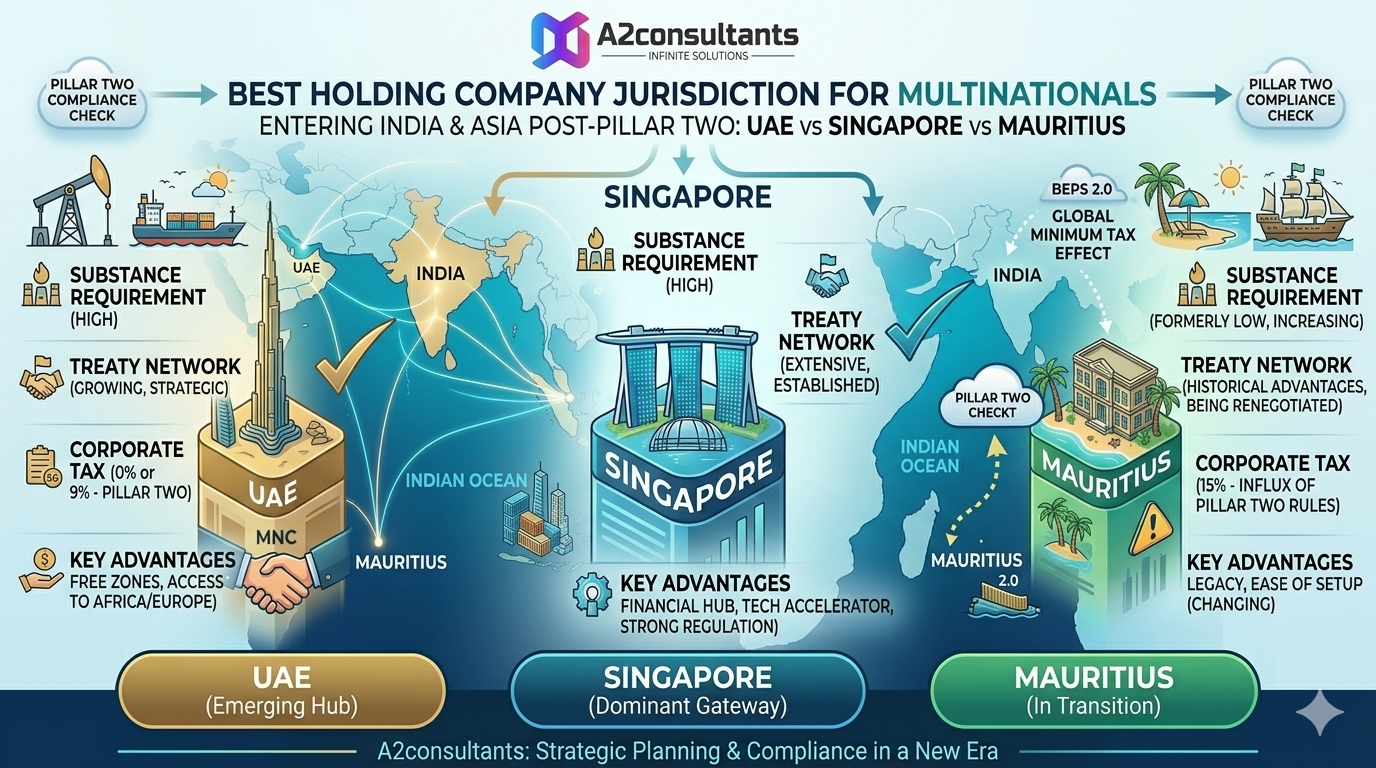
On January 15, 2026, the Supreme Court of India delivered a landmark tax ruling in the Tiger Global International III Holdings case that has reshaped how investors can claim treaty benefits under the India–Mauritius Double Taxation Avoidance Agreement (DTAA). The judgment has wide implications for foreign investors, particularly those routing investments via Mauritius to benefit from tax advantages — especially exemptions on capital gains tax.
Background: What Triggered the Case?
Tiger Global — a major U.S. investment firm — used Mauritius based entities to invest in Indian companies, including its 2018 exit from Flipkart after Walmart’s majority acquisition. The Mauritius entities sold their shares and claimed capital gains exemption under the India–Mauritius DTAA, relying on:
- Valid Tax Residency Certificates (TRCs) from Mauritius,
- Grandfathering provisions for investments made before April 1, 2017.
Until recently, this treaty route had been a popular safe structure for private equity (PE), venture capital (VC), and foreign portfolio investment into India.
What the Supreme Court Ruled
The Supreme Court overturned the earlier Delhi High Court decision that had sided with Tiger Global. The top court held the capital gain of 1.6Billion usd to be taxable in India:
1. TRCs are no longer a “magic shield”
A Tax Residency Certificate remains a necessary condition for treaty benefits, but it is not conclusive by itself. If a structure lacks commercial substance — i.e., real operations, decision making, and value creation in the treaty jurisdiction — treaty benefits can be denied.
2. Substance over form
Merely meeting formal requirements (board meetings, licenses, paperwork) is insufficient. The Supreme Court adopted a substance based test: if the Mauritius entity is merely a conduit vehicle with the real economic control outside the treaty jurisdiction, benefits can be denied.
3. GAAR applies even after grandfathering
India’s General Anti Avoidance Rules (GAAR) can override treaty safeguards if the main purpose of the structure is tax benefit, even if the investment was made before the relevant cutoff date. Thus, grandfathering provisions cannot guarantee protection unless the arrangement has genuine commercial substance.
4. India’s sovereign taxing power reinforced
The judgment stressed that tax treaties are meant to avoid double taxation, not create opportunities for double non taxation. A treaty cannot undermine a country’s constitutional right to tax income arising from domestic assets.
Implications for Mauritius Based Investments
1. Treaty benefits not guaranteed
Mauritius companies can no longer rely solely on a TRC and grandfathering to claim exemptions for capital gains linked to Indian assets. This affects:
- PE and VC exits
- Secondary sales through layered offshore vehicles
- Older investments previously considered safe under DTAA
2. Greater GAAR scrutiny
Even structures predating 2017 that benefited from grandfathering are now exposed to GAAR and can be re examined for tax avoidance.
3. Investor sentiment and FDI
The ruling has created concern among global investors about predictability in cross border tax treatment. Industry bodies urged the Indian government for clarity, fearing potential deterrence of foreign investment.
4. Increased due diligence
Authorities may treat layered “shell” setups as transparent for tax purposes if they lack real operational substance in the holding jurisdiction.
What Mauritius Holding Companies Should Do
To remain protected under tax treaties like the India Mauritius DTAA and defend treaty benefits, companies structured as holding vehicles should consider these best practices:
1. Establish Genuine Commercial Substance
Merely being incorporated in Mauritius is not enough. To demonstrate economic substance and Principal Purpose Test (PPT) is not tax benefit:
- Have real employees and office facilities in Mauritius
- Conduct actual board meetings and decision making on strategic matters locally
- Maintain bank accounts and operational workflows in Mauritius
- Generate genuine revenue and expenses in Mauritius
This aligns with substance requirements in anti‑abuse provisions globally.
2. Document Strategic Functions
Detailed documentation should show the Mauritius entity:
Was involved in making investment decisions
Executed cash flows locally
Actively managed its investment portfolio
Carried risk and returned value independently
A strong audit trail of decisions and operations can be vital in tax assessments.
3. Review and Strengthen Governance
Ensure the board in Mauritius:
Has independent directors
Makes substantive decisions within the treaty jurisdiction
Keeps minutes and evidence of meetings that align with substance over form
This helps rebut assertions that control resides elsewhere.
4. Align with Global Anti Abuse Standards
Tiger Global judgment reflects a broader global trend (e.g., OECD’s BEPS, ATAD in Europe) where tax treaties are interpreted in context of substance and anti avoidance. Companies should align their structures to:
Substance over shell planning
Economic reality over legal formalities
Transparency in ownership and control
5. Evaluate Treaty Alternatives
If treaty benefits are important and substance requirements are hard to satisfy, investors may:
Use jurisdictions with stronger permanent establishment protections
Consider tax efficient jurisdictions with real business activities
Reassess direct investment routes without opaque holding structures
But any structure must meet the new commercial substance tests.
In Summary
The Tiger Global Supreme Court judgment is a game‑changer in cross border taxation involving Mauritius (and similar DTAA jurisdictions). It marks a fundamental shift:
From form‑based compliance → to substance based scrutiny
From TRC certainty → to commercial reality tests
From treaty reliance → to anti avoidance enforcement
For Mauritius holding companies, the message is clear: structure with real economic purpose, not merely for treaty benefits. Proper governance, visible operations, and substance documentation are now essential to withstand scrutiny and legitimate the DTTA provisions.
For detailed insights and practical guidance, visit our Knowledge Center and access our curated guides on India market entry: https://www.a2consultants.in/guides/international-taxation-in-india-for-foreign-companies
Nagavarapu Sudheer is a veteran tax and regulatory consultant at A2 Consultants with over 24 years of experience. A fellow member of the Institute of Company Secretaries of India (F.C.S) with a background in Law (L.L.B) and Commerce (M.Com), he has specialized in FDI structuring and group corporate restructuring for Fortune 500 companies and global startups alike. https://in.linkedin.com/in/sudheer-nagavarapu-4225334b
Need a Structural Review of your business prospects in India? > If you are looking to pounce on the FTA opportunity and looking to review your business prospects . [Contact A2 Consultants for a Private Consultation ] https://www.a2consultants.in/home/book_slot
Need Expert Guidance on This Topic?
Whether it's India market entry, FDI structuring, GCC setup, or tax strategy — our experts can help you implement the right approach.
Schedule Your Consultation →